
DECIDE

Machine learning for decision making under uncertainty

About

Many important decisions are taken under uncertainty since we do not know the development of various parameters.

In particular the ongoing green transition requires large and urgent societal investments in new energy modes, infrastructure and technology. The decisions are spanning over a very long time-horizon, and there are large uncertainty
towards energy prices, demand of energy, and production from renewable sources.

Such problem can be described as two-stage stochastic optimization problems, where we first decide which facilities to establish, and then we have to schedule the production/transportation for a stochastic demand, using the given facilities. If the decision variables are binary (e.g. location of facilities) such problems are extremely difficult to solve.

In this project we will develop a new framework for investment decision making under uncertainty based on a combination of machine learning and operations research. The goal is to enable a more transparent and inclusive decision process, while ensuring well-founded and more robust investment decisions.

Team

Meet the team behind DECIDE

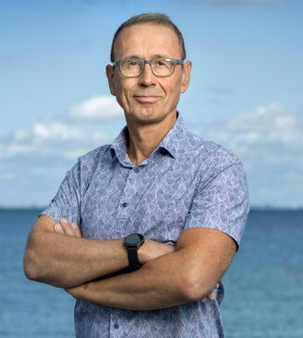
David Pisinger


David is the PI and leader of DECIDE. He is professor in operations research at DTU Management, and former professor at DIKU, University of Copenhagen. David graduated in mathematics and computer science in 1990, and finished his PhD at University of Copenhagen in 1995. His main research topics include; optimization under uncertainty, machine learning in optimization, maritime logistics, transportation problems, and offshore wind farms. He has written more than 100 papers in leading journals, and a monograph on Knapsack Problems. 

David received the PhD prize of the Danish Academy of Natural Sciences in 1995 for his thesis on Knapsack Problems. Moreover he received the Hedorfs Fonds prize for Transport Research 2013; award of teaching excellence Faculty of Natural Sciences, University of Copenhagen 2000; and the Teaching Prize at DTU Management in 2016, 2024. He received the Glover-Klingman prize in 2018 (with Martina Fischetti) and in 2019 he was one of the finalists for the Franz Edelman Award. 

Having a background in Knapsack Problems, David can be recognized on always wearing a knapsack.


Atefeh Golsefidi


Atefeh is a postdoctoral researcher in DECIDE project, holding a PhD from DTU Management. She specializes in machine learning and optimization, focusing on integrating deep generative models with optimization methods to tackle complex decision-making challenges. Her research is dedicated to generating precise small scenario sets for stochastic optimization using deep generative models, ensuring scenarios closely match the real distribution while capturing the full set’s properties. This approach enhances decision-making, leading to more robust and transparent strategies in complex systems. Looking ahead, Atefeh aims to refine these models further and extend their applications to drive sustainable and efficient solutions across various sectors. She is also eager to collaborate with industry and academia to foster innovation and create real-world impact.

For more information or to get in touch, feel free to contact her at ahego@dtu.dk

Kristine Børsting


Kristine graduated from DTU in 2021 with a master’s in Mathematical Modelling and Computing. After a few years in the industry, she has now returned to DTU to write her PhD on "Acceleration methods for stochastic optimization problems" during which she will address the question: "How can we reduce the complexity of stochastic programming problems with minimal loss of decision quality?”

She will focus on stochastic two-stage models with integer/binary decision variables which are notoriously hard to solve for large scenario sets. The goal is to develop methods that can take advantage of the full scenario dataset but without directly solving the model with all data.

Mikkel Lassen Johansen


Mikkel is a home-grown product of DTU and is currently doing his PhD as part of the DECIDE project.

In the PhD project, Mikkel will investigate diversifying heuristics for Stochastic Optimization Problems (SOPs) in order to generate a palette of near-optimal solutions. The motivation behind this approach is to challenge the most commonly used solutions methods for SOPs, which only return a single, optimal solution. A palette of near-optimal solutions will expose multiple solution structures and enable transparency for the decision-making process.


Updates

Learn more about DECIDE
Overview Activities GitHub